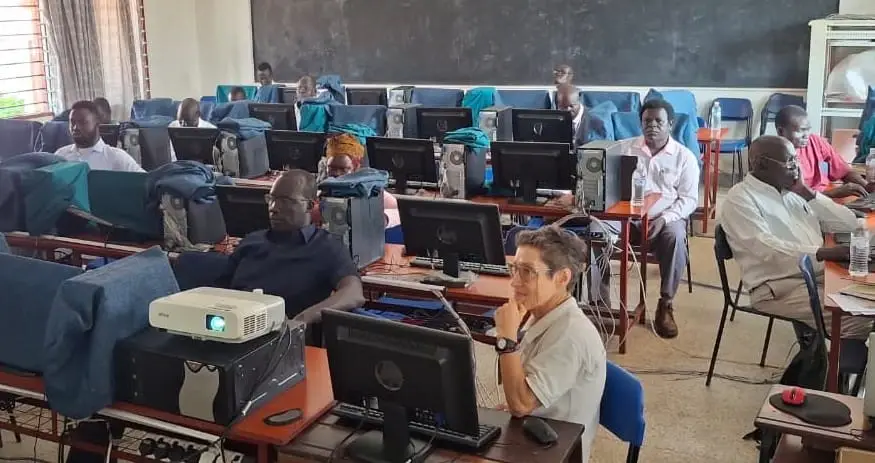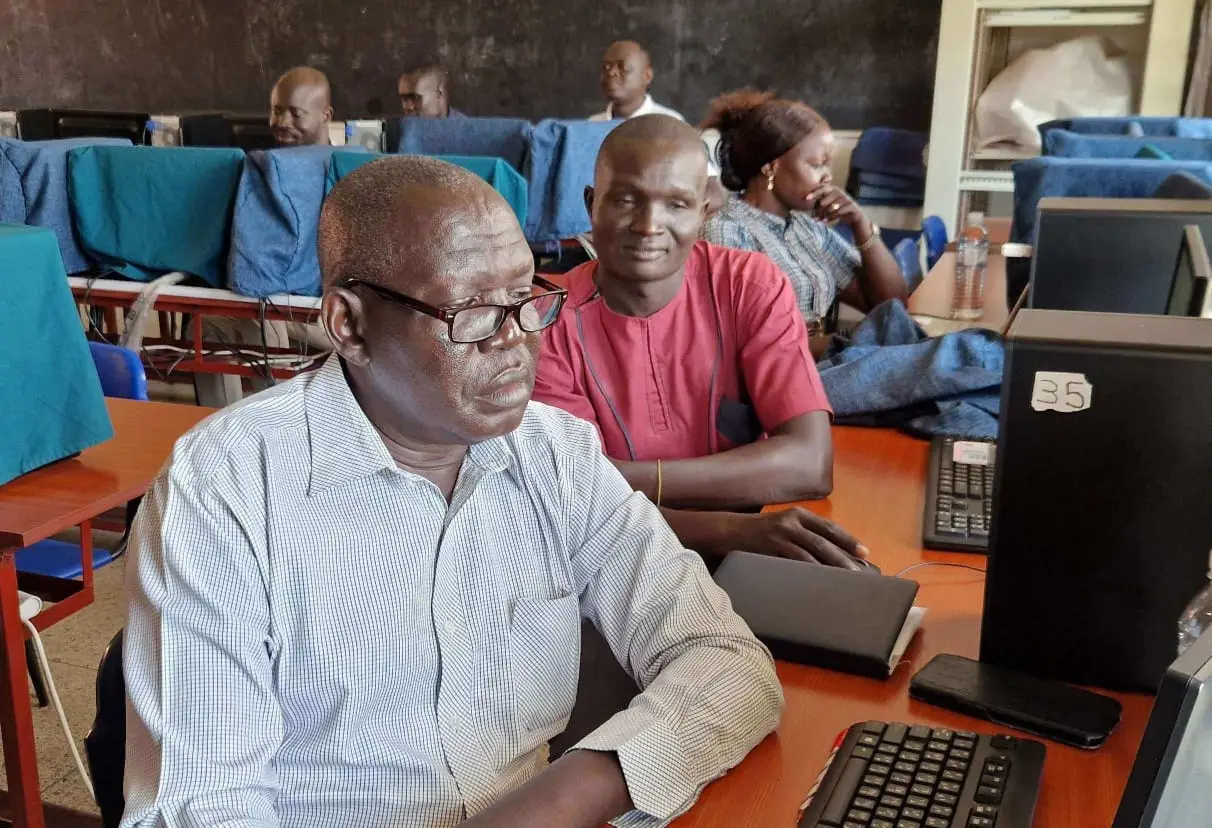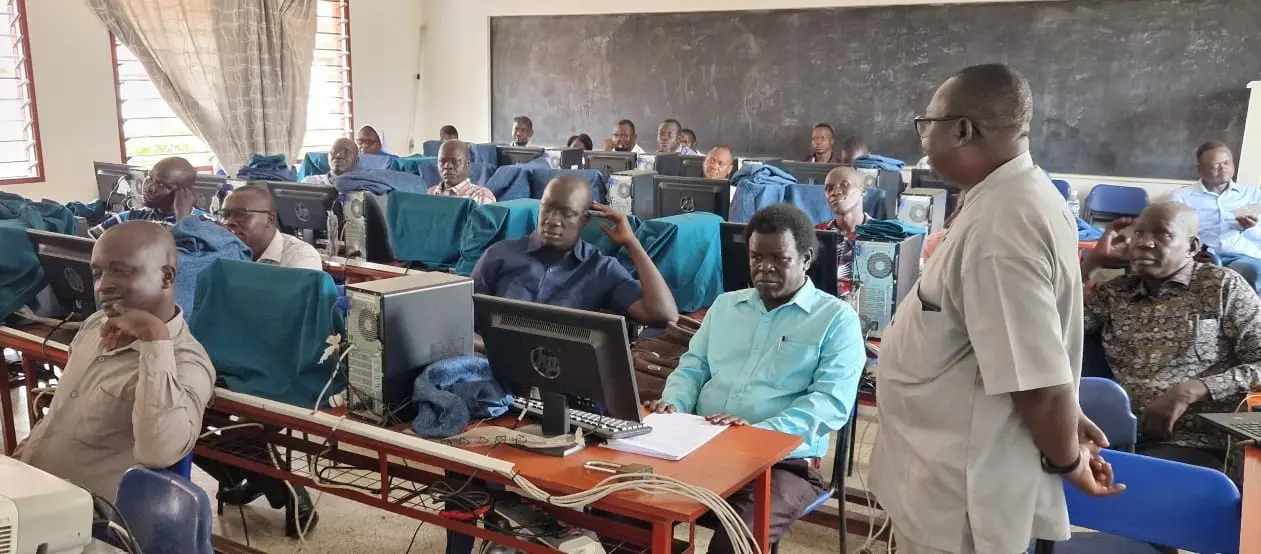
From June 26 to July 17, 2026, lecturers from the Catholic University of South Sudan participated in a hands-on training programme on the design and development of online courses.
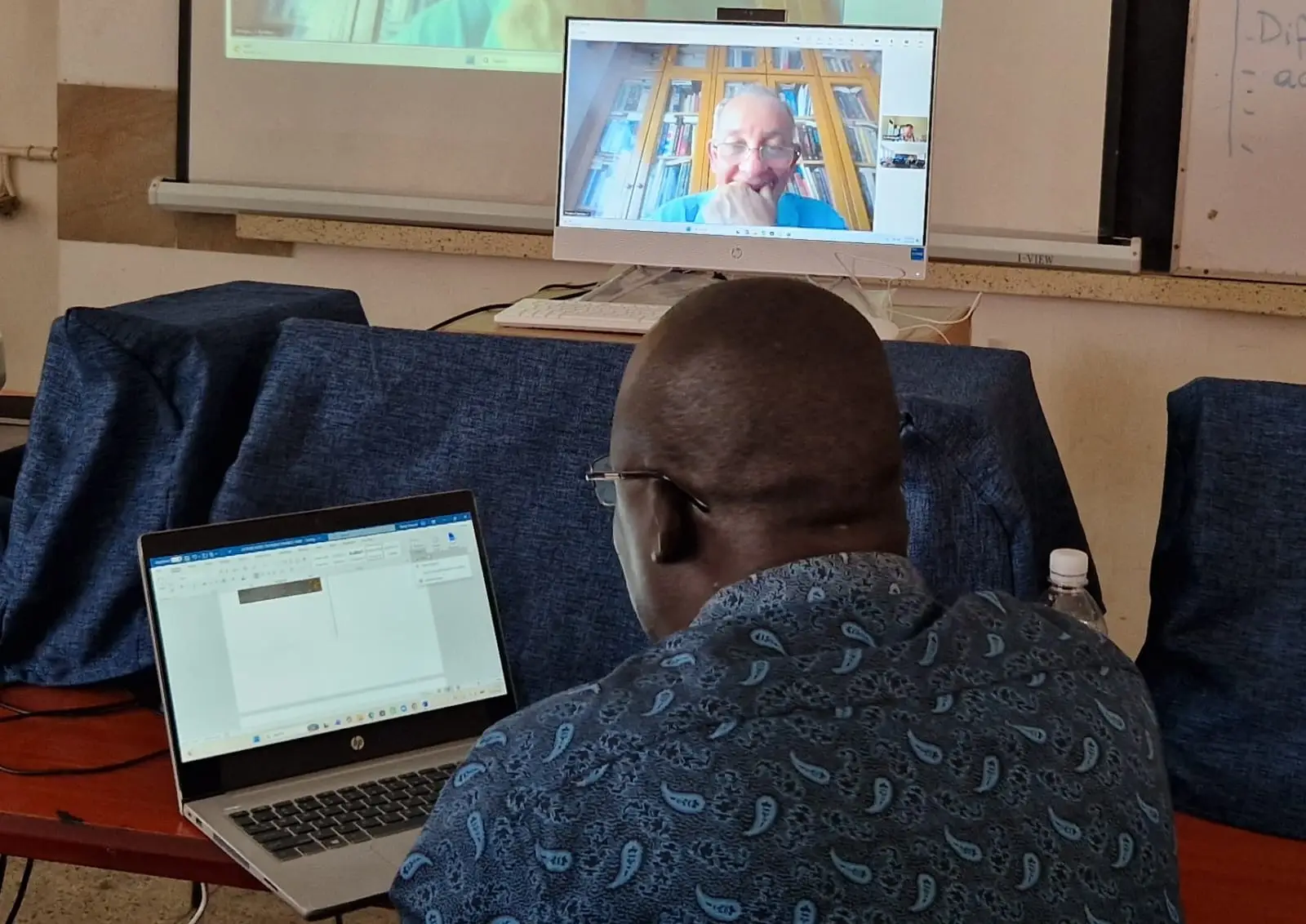
The training was initially planned as a face-to-face session with Prof. Kyriakos E. Georgiou of the University of Nicosia, who was scheduled to travel from Cyprus to South Sudan. However, due to an Ebola warning, he was unable to reach Juba. Nevertheless, he was able to conduct the scheduled training online.
This unexpected circumstance provided an opportunity to implement a relevant component of the EU-funded project, “Enhancing Higher Education E-Learning Structures and Modules in Conflict Regions of East Africa (Kenya, Sudan and South Sudan).” The project addresses online courses, the Moodle platform, Learning Management Systems, and multi-format teaching. Fr. Alan Neville, Director of the Rumbek Campus, also participated online.
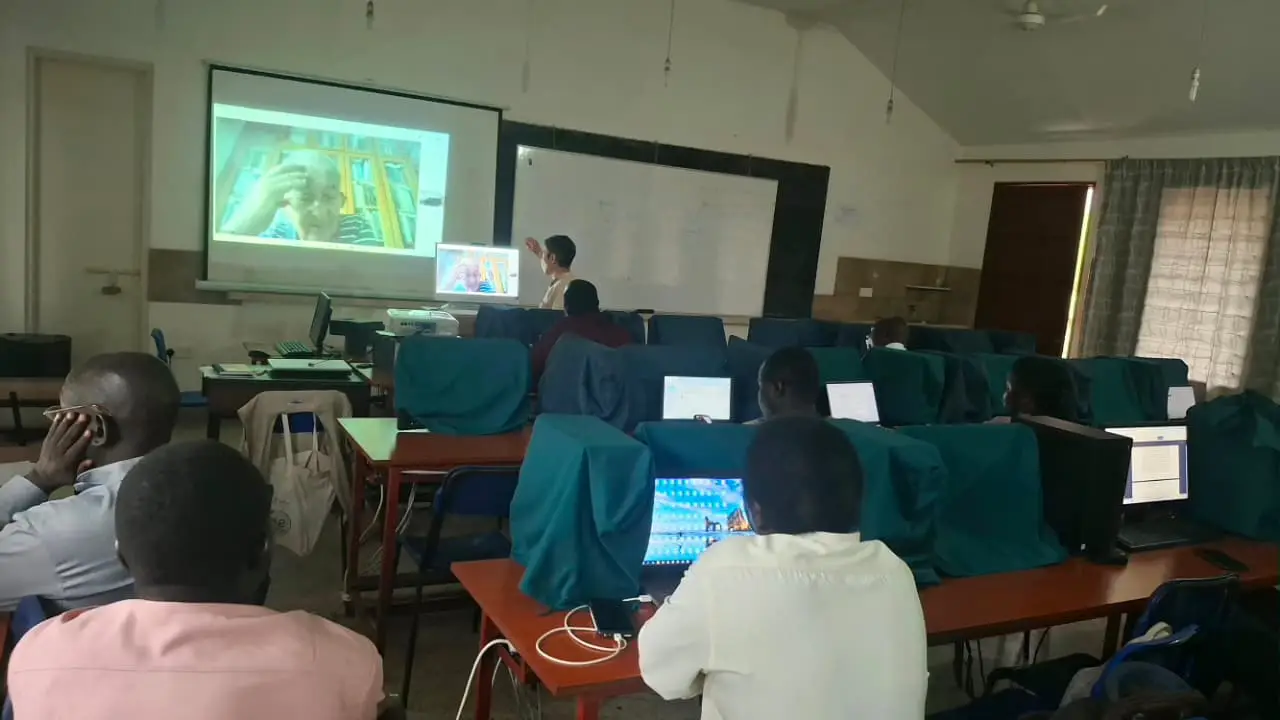
The Vice Chancellor introduced the training with a presentation on learner-centred teaching and the importance of learning outcomes. He emphasized that learning outcomes should be measurable and achievable, and formulated using action verbs based on the revised Bloom’s Taxonomy of Educational Objectives—a widely recognized framework for classifying educational objectives according to levels of complexity.
The first session continued online, with Prof. Kyriakos actively engaging participants through practical assignments related to the Moodle Learning Management System.
Kejgon James and Sr. Paola Moggi provided on-site support for internet connectivity and access to the different components of the Moodle platform, while Augustine Galla was available to provide technical assistance. The sessions were adequately spaced to allow each lecturer sufficient time to complete the various tasks, ranging from refining course outlines for online teaching to uploading appropriate course materials onto Moodle.
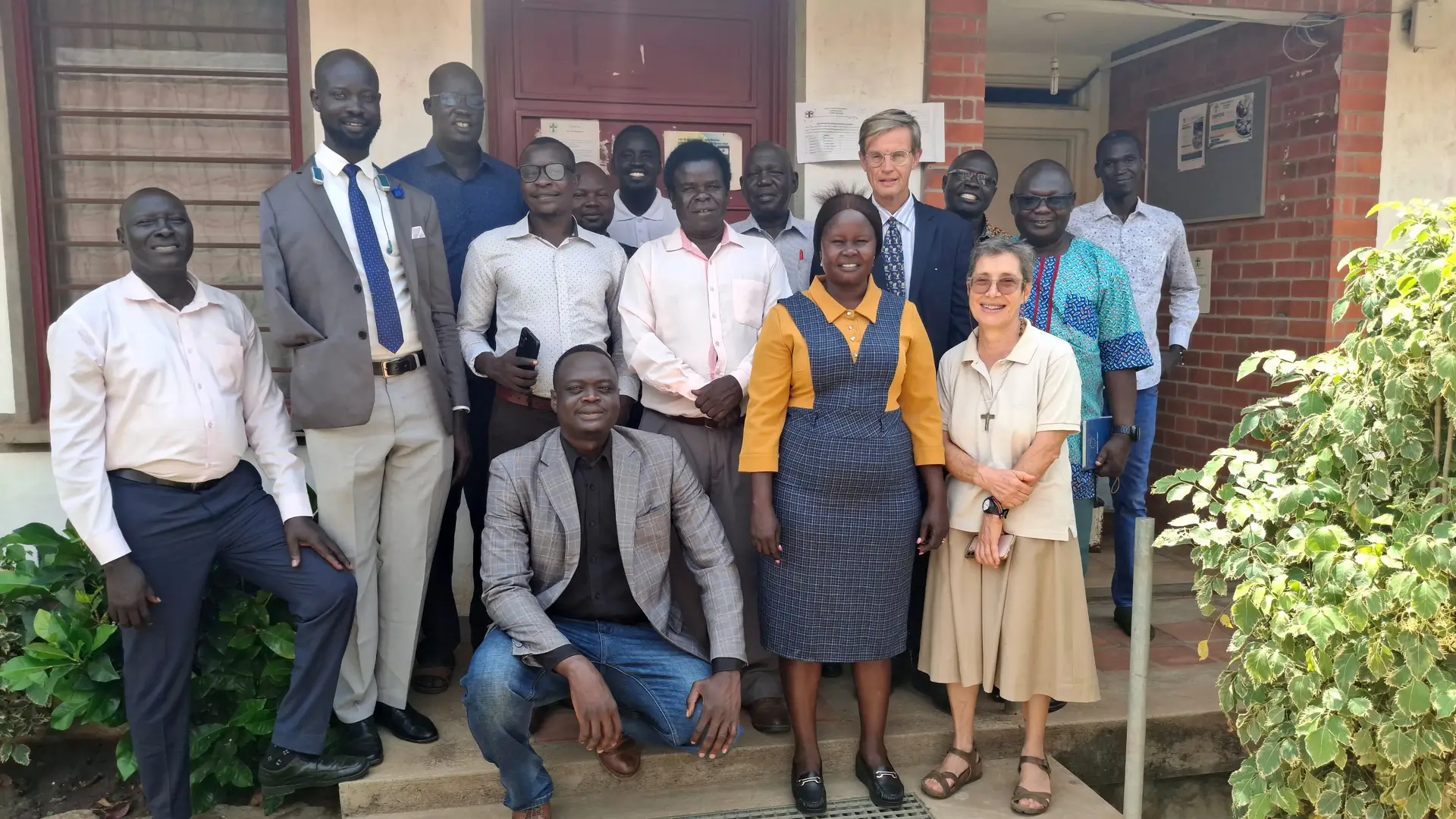
The final session, held on July 17, 2026, was honoured by the visit of Lothar Jaschke, Deputy Head of the EU Delegation. He praised the importance of quality higher education in South Sudan, the world’s youngest nation.
Prof. Kyriakos also commended the commitment of the participants and left them with well-defined assignments to complete before the next training session. For many lecturers, the beginning of the training was demanding, but the outcome was highly positive.
Mr. Jimmy Pitia, Senior Lecturer in the Faculty of Economics and Business Administration and Advisor to the Vice Chancellor on Staff Affairs, said:
This course has been so marvellous! Initially, it was not easy for me to prepare and upload the material, but Prof. Kyriakos has been so encouraging in taking us through all the steps. Through practice, I hope we will progress further and surprise him when we start the next training session.
Dr. Suzy Anong Lomoro added:
At the beginning, it was a little difficult, but as we kept going, it became more interesting. I am impressed with the way the tutor has taken us through the process: asking questions, giving answers, and providing feedback on our course material. Now I feel more confident.
Dieng David Ring, Coordinator of the Diploma Programme, confirmed:
During the first two days, I was just listening, but then I became more engaged and tried to comply with the demands of the training. It was very interactive, thanks to Prof. Kyriakos, assisted here in Juba by Sr. Paola and Kejgon. I was able to learn a lot, and now I can say that the Moodle Learning Management System is really very nice.
Elijah Paulino, Acting Dean of the Faculty of Economics and Business Administration, highlighted the prospective relevance of online courses for South Sudan:
South Sudan is a young nation and is still not yet stable. Sometimes there are issues of insecurity, and students may be unable to reach the campus. Even in times of crisis, with the materials we post online, students will still be able to progress in their studies.
The training has therefore marked an important step in strengthening the university’s capacity to provide flexible, technology-supported learning opportunities. Despite the challenges posed by the circumstances, the commitment of the lecturers and the support of the training team resulted in a positive and practical learning experience.